Individualized ABA Services for Meaningful Progress
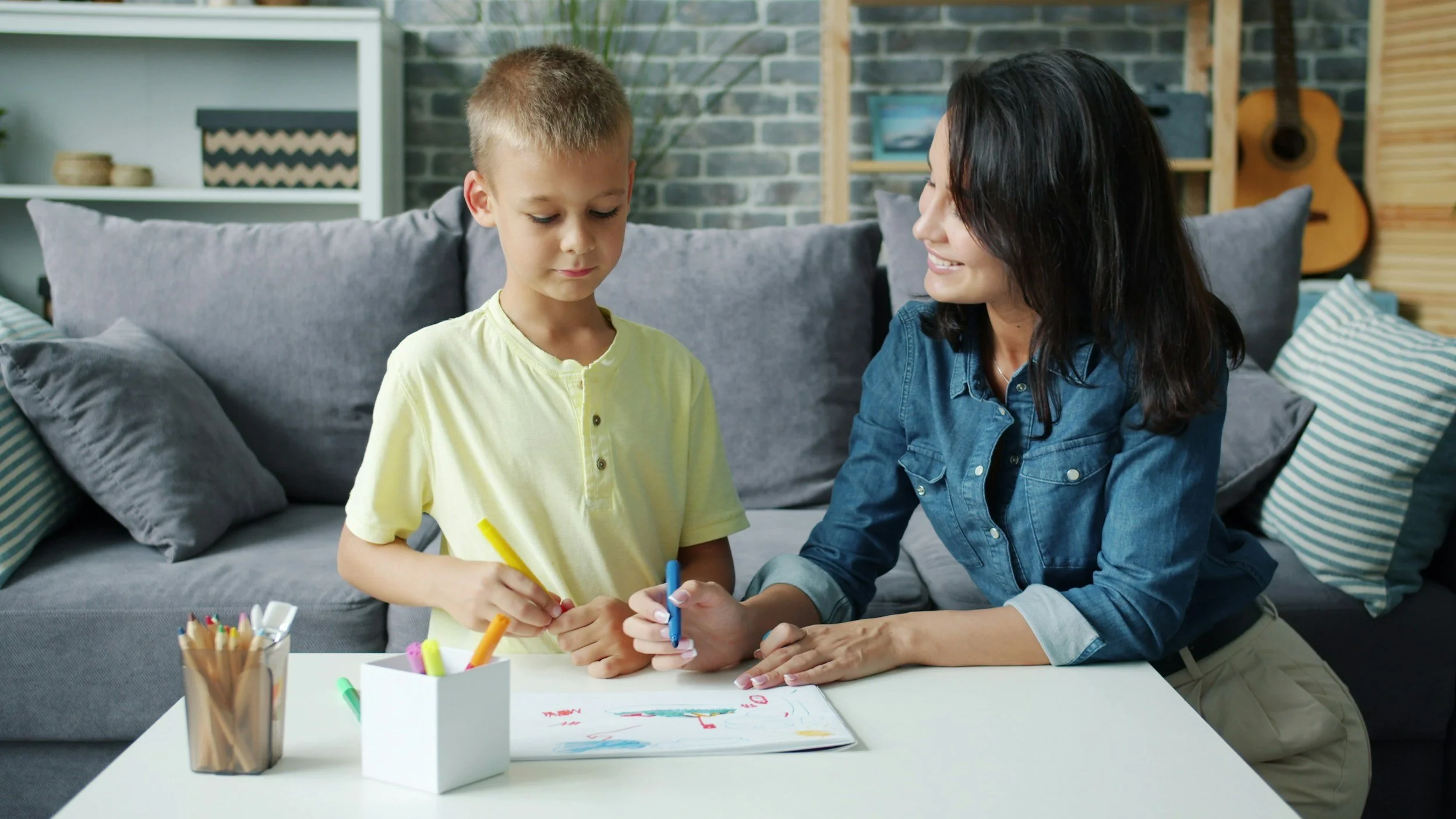
ABA (Applied Behavior Analysis) is an evidence-based approach that focuses on understanding how a child learns and develops new skills. Therapy is individualized to each child’s needs and may address communication, social skills, learning, daily living, and behaviors that interfere with everyday life. Our goal is to teach practical skills that help children participate more successfully at home, at school, and in the community.
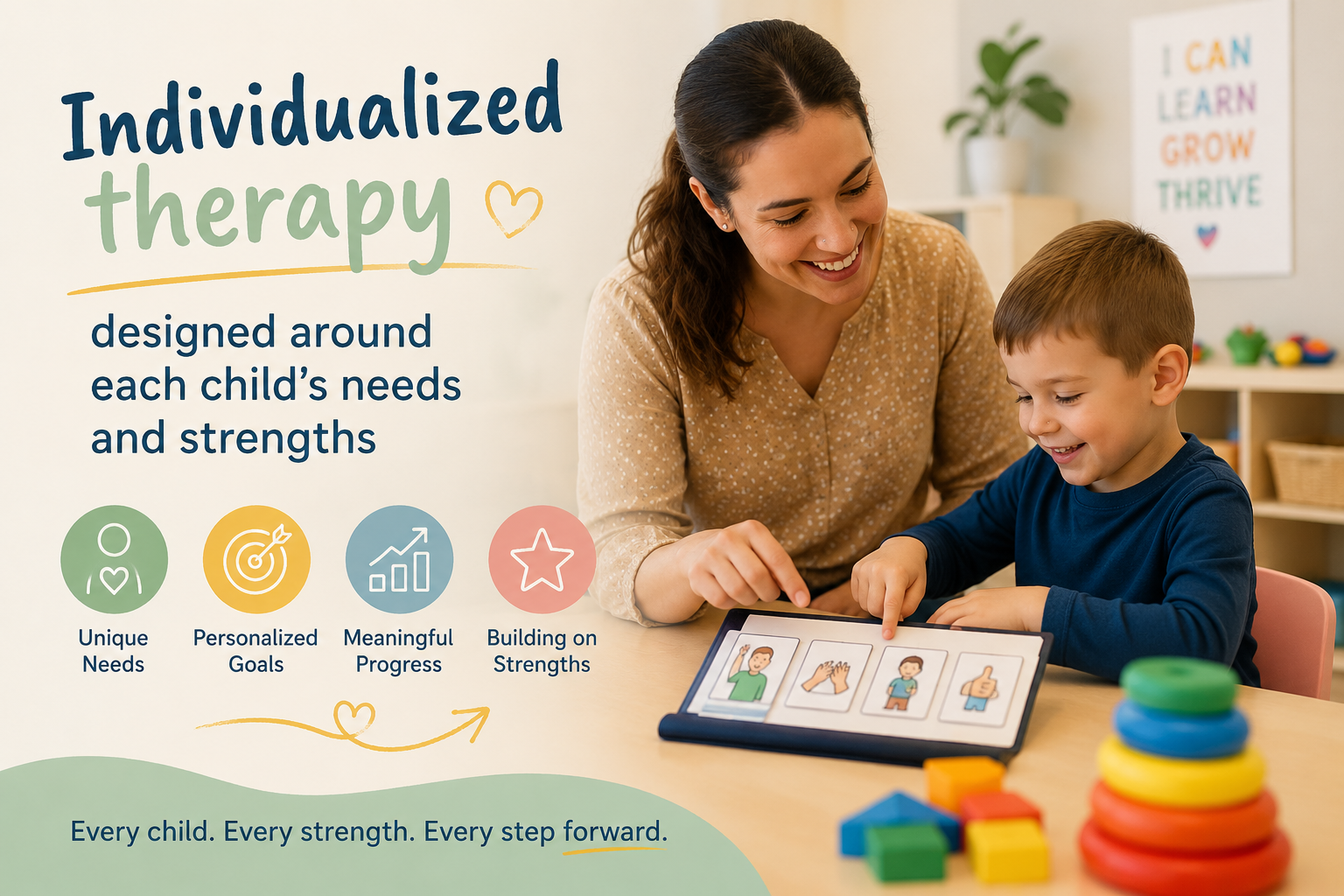
A qualified clinician begins by learning about the child’s strengths, needs, preferences, and current abilities. The clinical team then develops a treatment plan with specific, measurable goals. Therapy may include teaching communication, following directions, playing appropriately, interacting with others, completing daily routines, developing school-readiness skills, increasing independence, and reducing behaviors that interfere with learning or safety.
Comprehensive ABA therapy is an individualized treatment approach that addresses multiple areas of a child’s development and daily functioning. It may be appropriate for children who need support with communication, social skills, learning, independence, behavior, or participation in everyday routines.
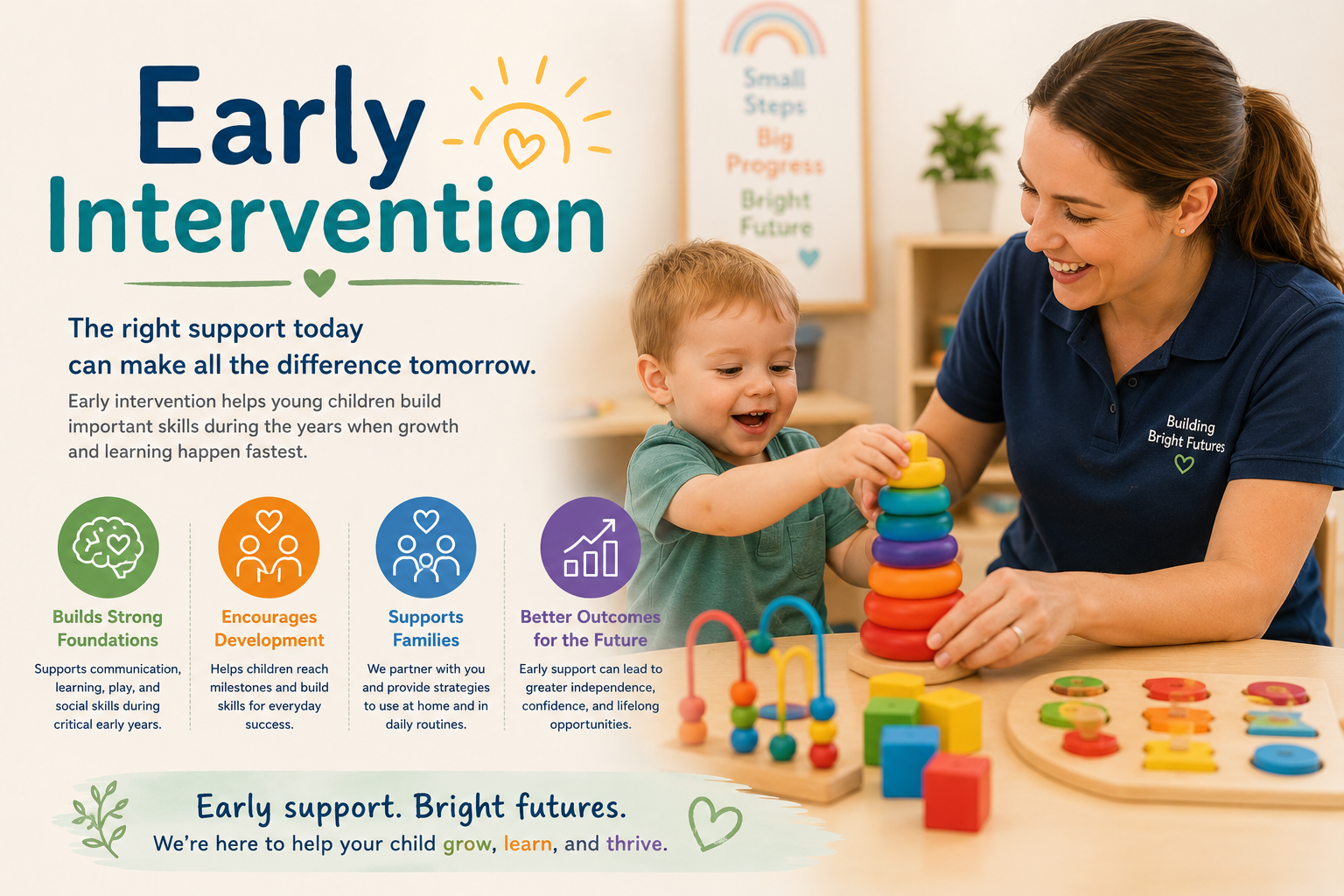
Caregivers are often an important part of early intervention. Strategies can be incorporated into play, meals, bedtime, outings, and other everyday routines so that learning continues beyond scheduled therapy sessions.
Early Intervention provides support during the early years of a child’s development, when foundational communication, learning, social, and independence skills are rapidly developing. Services are individualized for young children who may be experiencing delays or challenges in areas such as language, play, interaction, learning, or daily routines. Early intervention may focus on helping a child:
Communicate wants, needs, feelings, and choices
Respond to their name and follow simple directions
Develop imitation and learning-readiness skills
Engage in functional and imaginative play
Participate in routines and transitions
Build early social interaction skills
Develop feeding, dressing, hygiene, and other adaptive skills
Increase independence in age-appropriate activities
Communication Skills
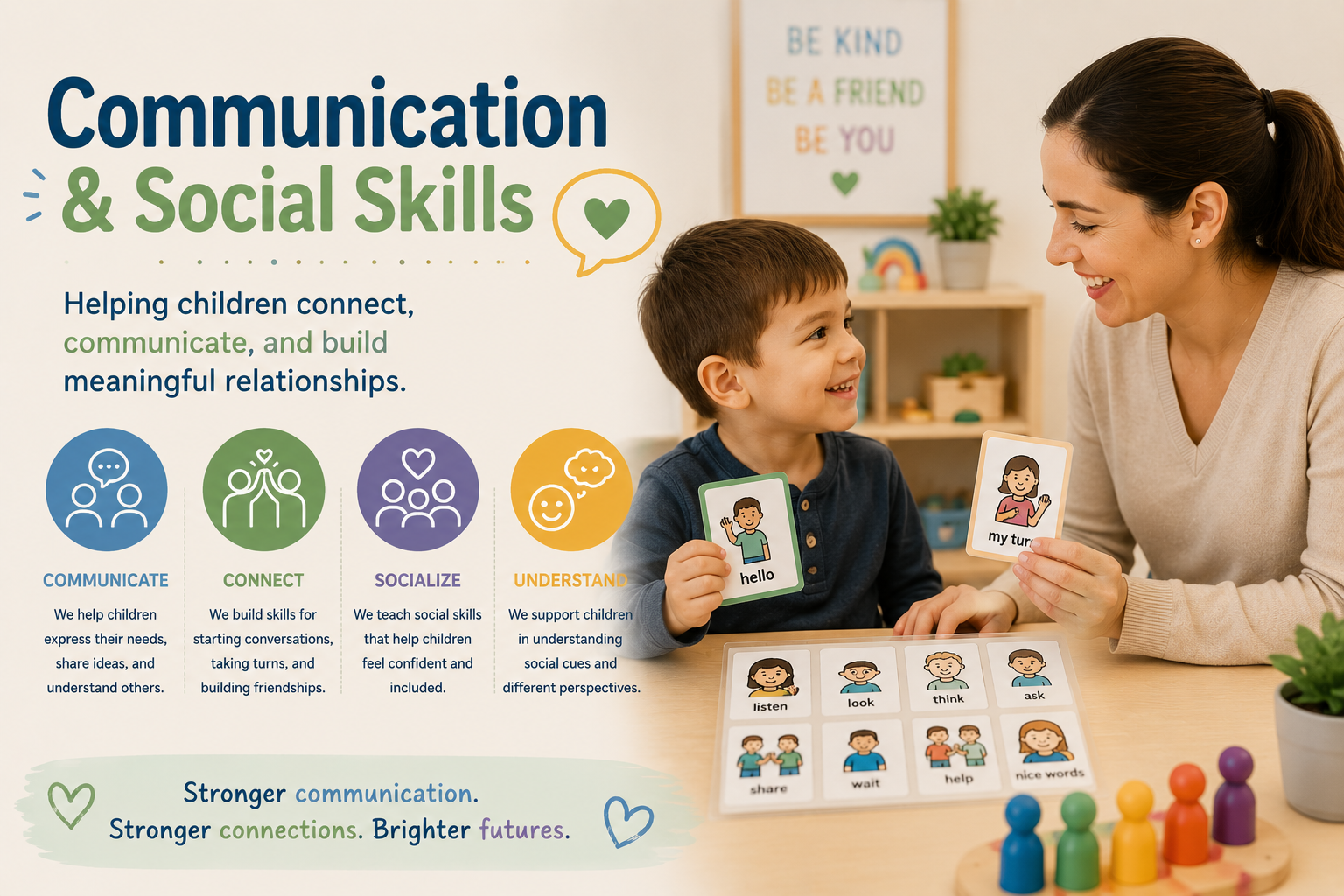
Communication support helps children express themselves and understand others more effectively. Communication may include spoken language, gestures, facial expressions, sign language, picture-based systems, speech-generating devices, or other forms of augmentative and alternative communication. Therapy may address:
Requesting preferred items activities, help, or breaks
Making choices
Labeling people, objects, actions, and feelings
Answering questions
Following directions
Initiating and responding during interactions
Communicating discomfort, frustration, or changes in needs
The goal is to give each child reliable and meaningful ways to communicate. When children can communicate more effectively, they may have more opportunities to participate, make choices, build relationships, and have their needs understood.
Social skills are taught in practical, meaningful situations rather than through memorization alone. Children may practice during play, structured activities, group interactions, community outings, or other settings where social participation is important.
Social Skills
Social skills therapy helps children participate more comfortably and successfully in interactions with family members, peers, teachers, and other people in their community. Goals are individualized based on the child’s developmental level, interests, and social priorities. Therapy may focus on:
Responding to greetings
Initiating interactions
Sharing and taking turns
Participating in cooperative play
Listening and responding to others
Recognizing social cues
Expressing feelings
Developing flexibility during play and routines
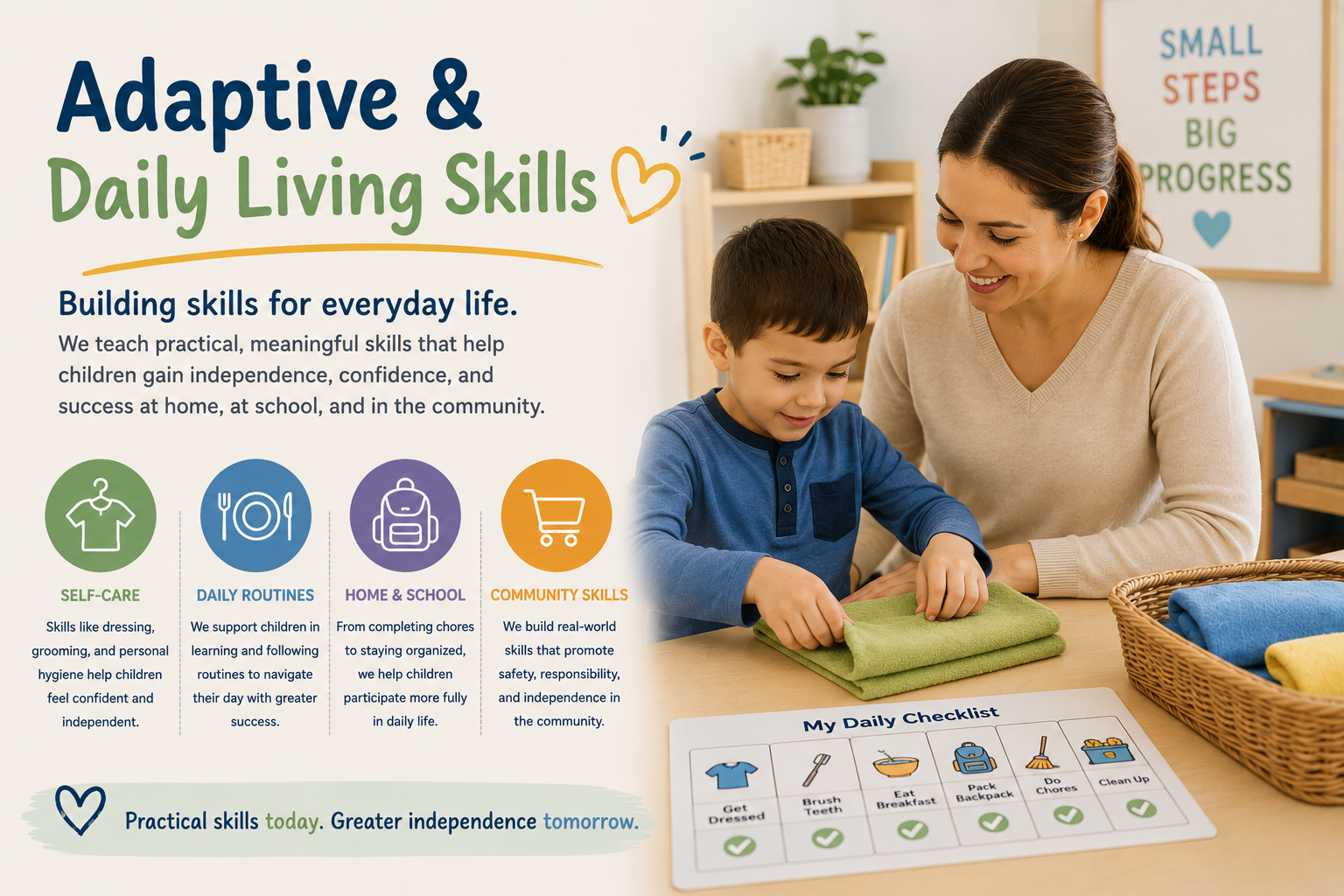
Adaptive and daily living skills are the practical abilities children use to care for themselves, participate in routines, and become more independent. Therapy breaks complex activities into manageable steps and provides support as the child learns to complete them more independently.
Areas of support may include:
Dressing and undressing
Brushing teeth and personal hygiene
Toileting
Handwashing
Eating and mealtime routines
Cleaning up and organizing belongings
Following morning, bedtime, and other daily routines
Completing household tasks
Waiting and transitioning between activities
Staying safe at home and in the community
Recognizing unsafe situations
Asking for help
Increasing independence with age-appropriate responsibilities
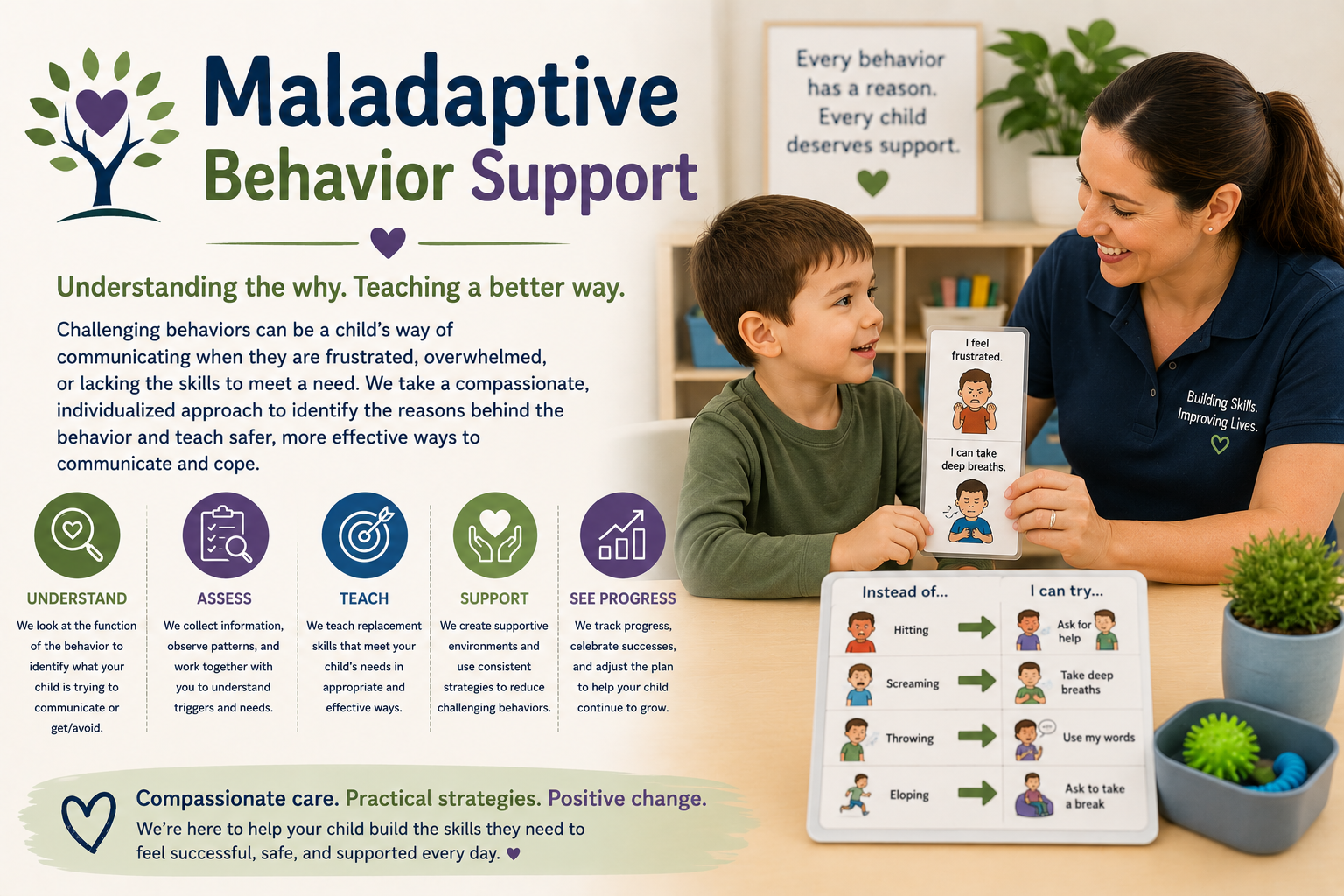
Behavior support begins with understanding what a behavior communicates or accomplishes for a child. A clinician may assess what happens before and after a behavior, when it occurs, where it occurs, and what factors may influence it. Behavior support may address behaviors that interfere with:
Learning & Communication
Safety
Sleep or daily routines
Participation at home, school, or in the community
Relationships and social interaction
Personal care and independence
Intervention plans are individualized and may include teaching replacement skills, improving communication, adjusting the environment, preparing for transitions, increasing predictability, and reinforcing helpful behaviors. Phoenix Behavioral Services focuses on understanding the reason a behavior occurs and teaching practical alternatives whenever possible. Families are included in the process so strategies can be used consistently across settings.
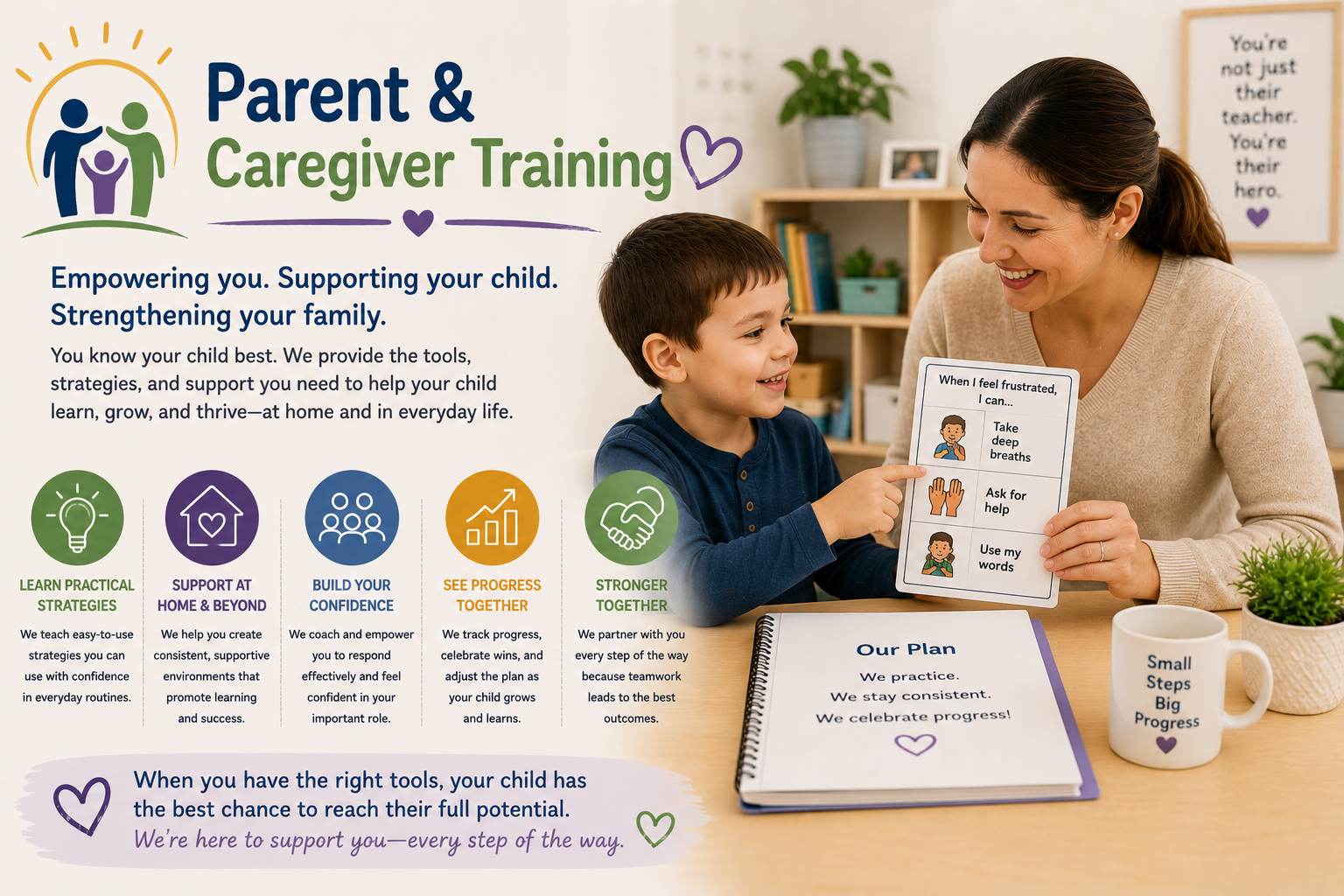
Parent and caregiver training helps families understand their child’s goals, recognize learning opportunities, and use supportive strategies during everyday routines. Caregivers receive guidance from the clinical team and have opportunities to practice strategies with feedback. Training may include:
Understanding the purpose or function of behavior
Supporting communication and requesting
Encouraging appropriate play and social interaction
Teaching daily living and independence skills
Preparing for transitions and changes in routine
Responding consistently to challenging behavior
Using reinforcement effectively
Supporting generalization across people and settings
Creating opportunities for learning at home and in the community
Tracking progress and sharing observations with the treatment team
Caregiver training is collaborative and individualized. The goal is to provide practical strategies that fit the family’s routines, values, resources, and priorities—not to add unnecessary stress or complexity.